
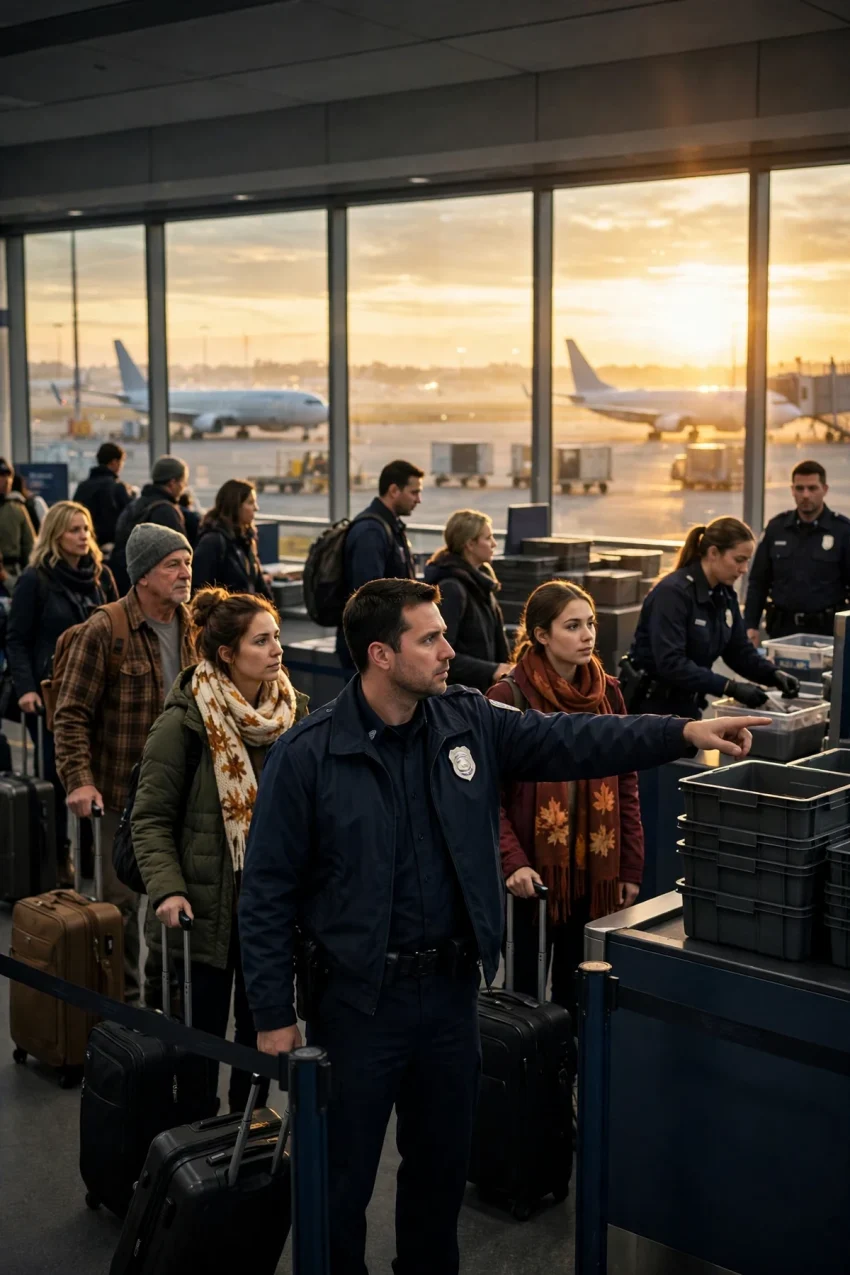
An Al Qaeda aviation warning has put US airlines and airports on alert days before the busiest travel week of the year — but officials are clear about one thing: there is no known specific, credible threat. On Thursday, November 19, the FBI, the Department of Homeland Security and the Transportation Security Administration jointly sent an informational bulletin to commercial airlines, air cargo carriers and airports across the country, warning that Al Qaeda affiliates and supporters have been praising September’s attempted hijacking of a Flydubai flight and urging similar attacks against American, Israeli and Jewish targets. The bulletin, first obtained by CNN and reported on Friday, November 20, arrives as about 6 million Americans prepare to fly over the Thanksgiving week — and it asks aviation workers, not passengers, to stay alert.
That distinction matters. This is not a public alert, and it does not change how passengers are screened — it is the kind of intelligence-sharing notice agencies routinely send to private industry. What makes this one different is the timing, and the specific attack the extremist messages are holding up as a model.
Al Qaeda aviation warning: what the bulletin actually says
According to the copy obtained by CNN, Al Qaeda affiliates and supporters “have released multiple messages praising the attempted hijacking and encouraging similar attacks against perceived US, Israeli, and Jewish interests” — praising the Flydubai attempt as a model for bypassing security and urging supporters to copy it.
The bulletin says the messaging “reiterates longstanding AQ narratives that encourage supporters to exploit aviation access, evade security measures, and conduct attacks using commercial aircraft”. It also notes that the praise, together with continuing hostilities in the Middle East, “could exacerbate existing grievances against the United States”.
The agencies were explicit about the limits of what they know. A law enforcement source told CNN that authorities are not aware of any specific, credible threat. No target airport has been named, no flights have been cancelled, and the TSA has announced no new screening rules. The FBI declined to comment.
The warning does carry one note of caution officials clearly wanted the industry to hear: people inspired by foreign terrorist groups have not typically turned to violence immediately in response to such calls, but they “have demonstrated the ability to mobilize rapidly and with little or no warning”. That is why the bulletin went out now — before the holiday rush, while staff can still be briefed.
The Flydubai flight behind the warning
To understand the bulletin, go back to September 30, 2026, and a flight most Americans never heard about. Flydubai flight FZ1073 was travelling from Dubai to Tel Aviv with 174 passengers and six crew members aboard when the co-pilot, Hamam al-Hammami, a 29-year-old Omani national, attacked the captain in the cockpit with a crash axe in an apparent attempt to seize the aircraft and crash it, according to the UAE Attorney General’s office.
Passengers and crew intervened, the captain survived, and the aircraft made an emergency landing in Tabuk, Saudi Arabia. Al-Hammami was detained and arrested. UAE prosecutors say he has admitted acting alone, according to the UAE Attorney General’s statement, and Israeli Prime Minister Benjamin Netanyahu told CNN the attacked pilot “managed to prevent a 9/11 disaster”. Flydubai suspended its Israel flights while the investigation continued. The incident has since drawn praise from Al Qaeda-linked figures, who have urged supporters to carry out similar attacks against American, Israeli and Jewish targets.
It is that incident — an insider in the cockpit, using a tool already on the aircraft — that the extremist messages have seized on. They do not describe a complex plot, but a model: someone with aviation access, using what is at hand. That is why the bulletin is aimed at airline and airport staff, and why its warning signs focus on insider behaviour.
Is it safe to fly this Thanksgiving?
For the roughly 6 million people expected to fly on US domestic flights between Tuesday, November 24, and Monday, November 30, the short answer is that nothing about the warning changes the safety of their flight. AAA projects 81.5 million Americans will travel at least 50 miles from home over the period, and the bulletin does not suggest any of them should stay home.
No new screening procedures have been announced, no airport has been singled out, and commercial flying remains one of the safest ways to travel. The warning is aimed mainly at the people who work in and around aviation — staff who handle luggage, hold access badges and move through secure areas daily.
Travellers should still expect the practical realities of the busiest week of the year: long lines, crowded terminals and full flights. Arrive early, leave extra time at security, and report anything that seems wrong to TSA officers or airline staff.
American aviation has had a difficult few weeks: earlier this month, an FAA ground stop stranded thousands of passengers worldwide, and the FBI is separately investigating a reported breach of its own nationwide police database. Neither event is connected to this warning, but together they explain why the agencies are taking no chances with the holiday rush.
What airport staff are watching for
The bulletin lists a series of warning signs that airline, airport and cargo workers have been told to look out for — and to report immediately. They describe the insider behaviour the Flydubai incident put in the spotlight:
- Attempts to evade or circumvent security procedures
- Requests for detailed information about flight operations or security procedures, with no legitimate business reason for asking
- Insistence on handling particular items of luggage or cargo personally, without assistance
- The unexplained loss of airline radios, access badges or uniforms
None of these signs, on its own, proves anything — a lost badge is usually just a lost badge. But staff who see one should report it rather than talk themselves out of it; the agencies would rather hear about a false alarm than miss a real one.
For passengers, the takeaway is simpler: if you see someone avoiding screening, asking unusual questions about security, or behaving strangely around aircraft and cargo areas, tell a member of staff.
What happens next
- Thanksgiving travel begins tomorrow. The travel period runs from Tuesday, November 24, to Monday, November 30, with about 6 million domestic flyers. Airport and airline staff will be working from the bulletin’s warning-signs list through the whole week.
- Watch for any change in TSA screening. None has been announced so far. If the agencies learn anything new, a change in screening procedures would be the first public sign of it.
- The Flydubai investigation continues. The UAE Attorney General’s office has said al-Hammami admitted acting alone, and flydubai’s Israel flights remain suspended while the investigation continues.
- More extremist messaging is likely. The bulletin describes multiple messages already circulating. Security agencies will be monitoring whether the praise for the Flydubai attempt escalates into more specific calls for action.
- The warning will be judged by what does not happen. If Thanksgiving week passes without incident, it will look like routine caution — but its real test is whether the vigilance it asks for is still there at the next holiday rush.
The Al Qaeda aviation warning is, in the end, a system doing what it should: sharing intelligence with the people who can act on it, before they need it. There is no known specific, credible threat, no reason to cancel a flight, and no new rule for passengers — only a warning, and a week in which millions of Americans will count on the people who received it to take it seriously.
Vote: Does the aviation warning change your Thanksgiving travel plans? — YES / NO / NOT SURE
Poll results are shown transparently with vote counts and are not scientific.
Sources: CNN, via LA Post, “Security officials warn the US aviation industry of recent calls for attack by Al Qaeda” (Nov 20, 2026) — JFeed, “Al-Qaeda Aviation Threats Target US Thanksgiving Travel” (Nov 21, 2026) — Matzav, “TERROR ALERT: FBI Warns of Possible Copycat Aviation Attacks Targeting Americans, Israelis and Jews” (Nov 21, 2026)