
Iraq Jurf al-Sakhar: Troops Enter Militia Stronghold
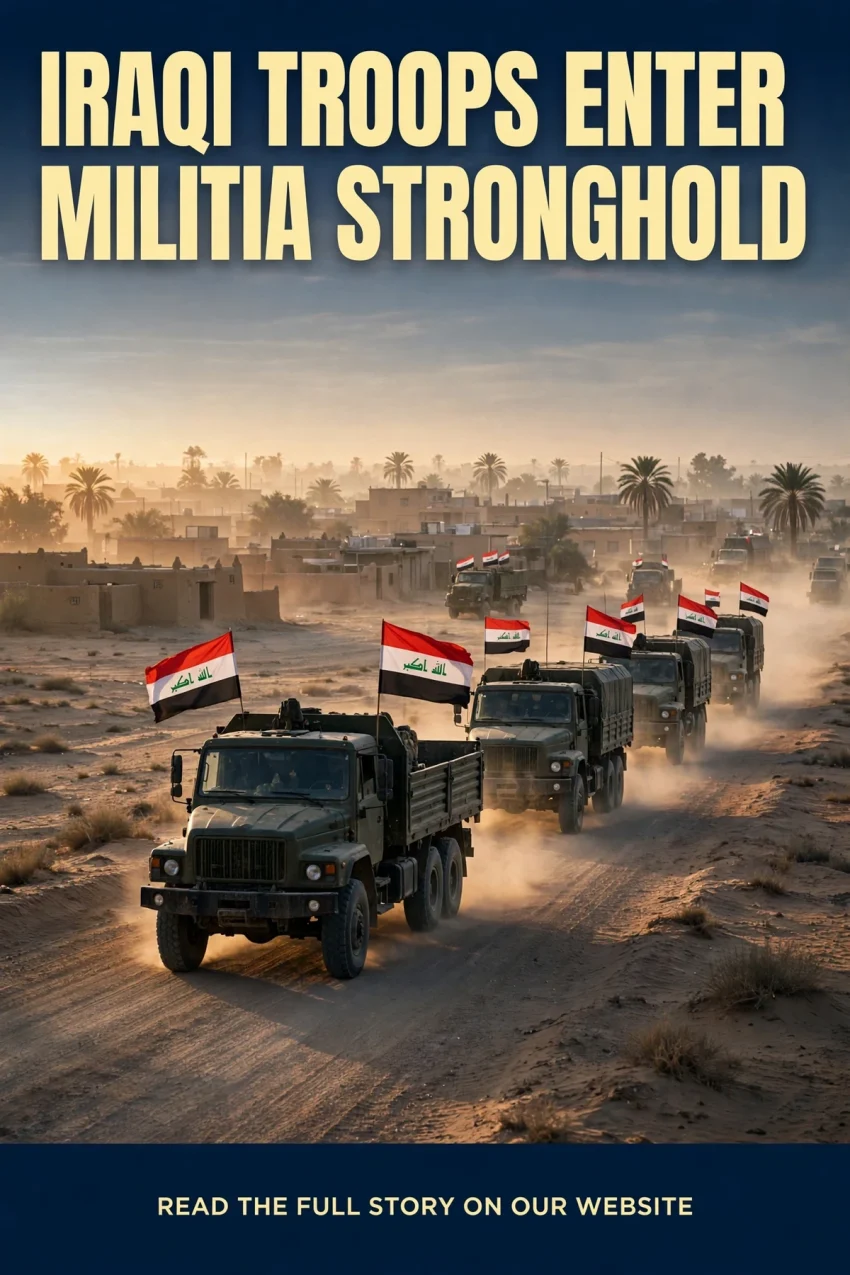
Iraq Jurf al-Sakhar is back under the state’s gaze for the first time in more than a decade. On Friday 20 November 2026, Iraqi security forces deployed into Jurf al-Sakhar, the stronghold of the Iran-backed militia Kataib Hezbollah, about 60 kilometres (37 miles) south-west of Baghdad. A convoy flying Iraqi flags took up positions in the town centre. No fighting was reported. Today, Saturday 21 November, a new security headquarters opens in the town to oversee the handover.
It is a striking moment — and a deliberately ambiguous one. The deployment came after roughly two months of difficult negotiations brokered by Shi’ite politicians, talks that nearly collapsed more than once. The government presents it as the state reasserting control over a town it has not governed since 2014. The militia, meanwhile, says it is not leaving at all.
What Happened on Friday
The deployment was a joint operation, and its composition tells its own story. A brigade from the Iraqi Army, a brigade from the Federal Police and a regiment from the Energy Police — brought in to guard oil pipelines — moved in alongside two brigades from the Popular Mobilisation Forces (PMF), the state umbrella organisation that itself includes some Kataib Hezbollah fighters. A joint operations centre became operational at 06:00 local time (03:00 GMT) on Friday, and the security headquarters that opens today will oversee the handover.
Prime Minister Ali al-Zaidi ordered the move this week. He has said the state is “not waging war” — the aim is to bring weapons and territory back under state control without a confrontation. That framing matters: Kataib Hezbollah is Iran’s most powerful Shi’ite militia ally in Iraq, and a direct assault on its stronghold risked a firefight Baghdad has been determined to avoid. The entry itself was peaceful. The convoy moved in under Iraqi flags; militia fighters stood nearby by their own flags. There were no reports of shots fired — a negotiated arrival, not a battle.
Why Now: The Oil-Smuggling Accusation
The trigger was an accusation — and it is an accusation, not a proven fact. Iraqi officials say Kataib Hezbollah has run an oil-smuggling network siphoning state oil worth hundreds of millions of dollars since 2021. A leaked Interior Ministry intelligence report alleges crude was siphoned from two state pipelines, with makeshift underground refineries, pumping equipment hidden in hangars and storage pits. Reuters sources put the scale at a 26-inch pipeline carrying at least 200,000 barrels a day. An investigative committee entered the zone on 13 November with military backing, and nine senior Babil officials — including the provincial police chief and the director of the Oil Pipelines Company — have been dismissed and referred to the courts.
Kataib Hezbollah denies all of it. The group calls the smuggling reports fabricated, accuses Prime Minister al-Zaidi of corruption and political extortion, and says its plant is a legitimate fuel-quality facility more than 5,000 metres from the pipeline. Its chief told fighters on Thursday 19 November to return to routine duties while keeping combat readiness high. A militia source told Reuters the group “will not leave” Jurf al-Sakhar and had merely given the government a way out. No court has ruled on the smuggling claims, and the “hundreds of millions” figure is an officials’ estimate, not an audited loss.
That contradiction is the story: some summaries say militia members will withdraw over a month; the militia itself says it will not leave. Until the terms are published or tested on the ground, the exact deal remains unclear — and today’s headquarters opening is the first real test of whose version is right.
Iraq Jurf al-Sakhar: What We Know — and What Is Disputed
| Topic | Known | Disputed |
|---|---|---|
| Who controls Iraq Jurf al-Sakhar now? | A joint force is in the town centre; a security HQ opens Sat 21 Nov. | Whether Kataib Hezbollah is actually withdrawing, or staying put. |
| The oil-smuggling claim | Officials allege a network siphoning state oil worth hundreds of millions since 2021; 9 officials sacked. | The militia denies it entirely and calls the reports fabricated; no court ruling. |
| How the deployment happened | Negotiated compromise after ~2 months of talks; peaceful entry, no fighting reported. | The exact terms of the compromise; the “withdrawal over a month” claim is not confirmed by the group. |
| The 140,000 displaced residents | Barred from returning since 2014. | Whether, and when, they will be allowed home. |
A Town Sealed Off for a Decade
To understand why Iraq Jurf al-Sakhar matters, you have to know the town. Jurf al-Sakhar — renamed Jurf al-Nasr by the militia — covers about 345 square kilometres on the Shi’ite pilgrimage route between Baghdad and Karbala. It was once a Saddam-era military-industrial site. ISIS seized it in 2014; the PMF retook it later that year. Kataib Hezbollah then took full control, sealed the town and barred state institutions from entering. Around 140,000 displaced residents have been prevented from returning ever since.
Kataib Hezbollah is designated a terrorist group by the United States. Before the committee’s arrival it mobilised around 8,000 fighters toward the town — a show of strength that underlined how close this came to armed confrontation. The group’s power is part of a wider regional pattern, where state authority and armed groups compete for control: the same tension behind the recent Somalia–UAE row over sovereignty and foreign influence and the shifting balance between Washington and its partners in the region, as in the US–Venezuela military deal.
Why This Is a Test for Baghdad — and for the Region
The stakes go well beyond one town. The Iraq Jurf al-Sakhar deployment is the clearest test yet of whether Baghdad can reassert state authority over Iran’s most powerful Shi’ite militia ally without provoking an armed confrontation. Iraq is an ally of both the United States and Iran, and its government walks a line between the two every day. A peaceful reassertion of control would strengthen the Prime Minister and the state. A confrontation — or a quiet climbdown dressed up as a deal — would do the opposite. And this is not a clean “government versus militia” story: the joint force itself contains PMF brigades, and the PMF is a state umbrella that includes Kataib Hezbollah fighters. The state and the militia overlap — which is why the deployment had to be negotiated rather than ordered.
What Happens Next
- Today, Sat 21 Nov: the security headquarters opens in Jurf al-Sakhar to oversee the handover — the first test of the compromise.
- Over the coming weeks: watch whether Kataib Hezbollah fighters actually leave, or remain in place as the militia says they will. The “withdrawal over a month” claim will be proven or disproven on the ground.
- The smuggling investigation: the dismissed Babil officials have been referred to the courts; the leaked intelligence report’s claims have still to be tested in any legal process.
- The 140,000 displaced: the human question — can the residents barred from their homes for a decade finally return, and under whose authority?
The troops are in. The militia says it is not leaving. The headquarters opens today. What happens in Jurf al-Sakhar over the next month will answer the question neither side has yet answered honestly: who really controls the town.
This poll is not a scientific survey — it reflects the views of readers who choose to vote.
Sources
- Reuters via WDSM: https://wdsm710.com/2026/11/20/iraqi-security-forces-to-deploy-in-iran-backed-militia-stronghold-security-officials-say/
- Al Jazeera explainer: https://aljazeeranews-mggx1uo47w.edgeone.app/news/2026/11/18/what-is-iraqs-jurf-al-sakhar-and-what-is-behind-govt-push-to-control-it
- New Kerala / Al Jazeera: https://www.newkerala.com/news/a/iraq-reaches-compromise-deploy-joint-force-kataib-hezbollah-928.htm
1 thought on “Iraq Jurf al-Sakhar: Troops Enter Militia Stronghold”